120+
books authored
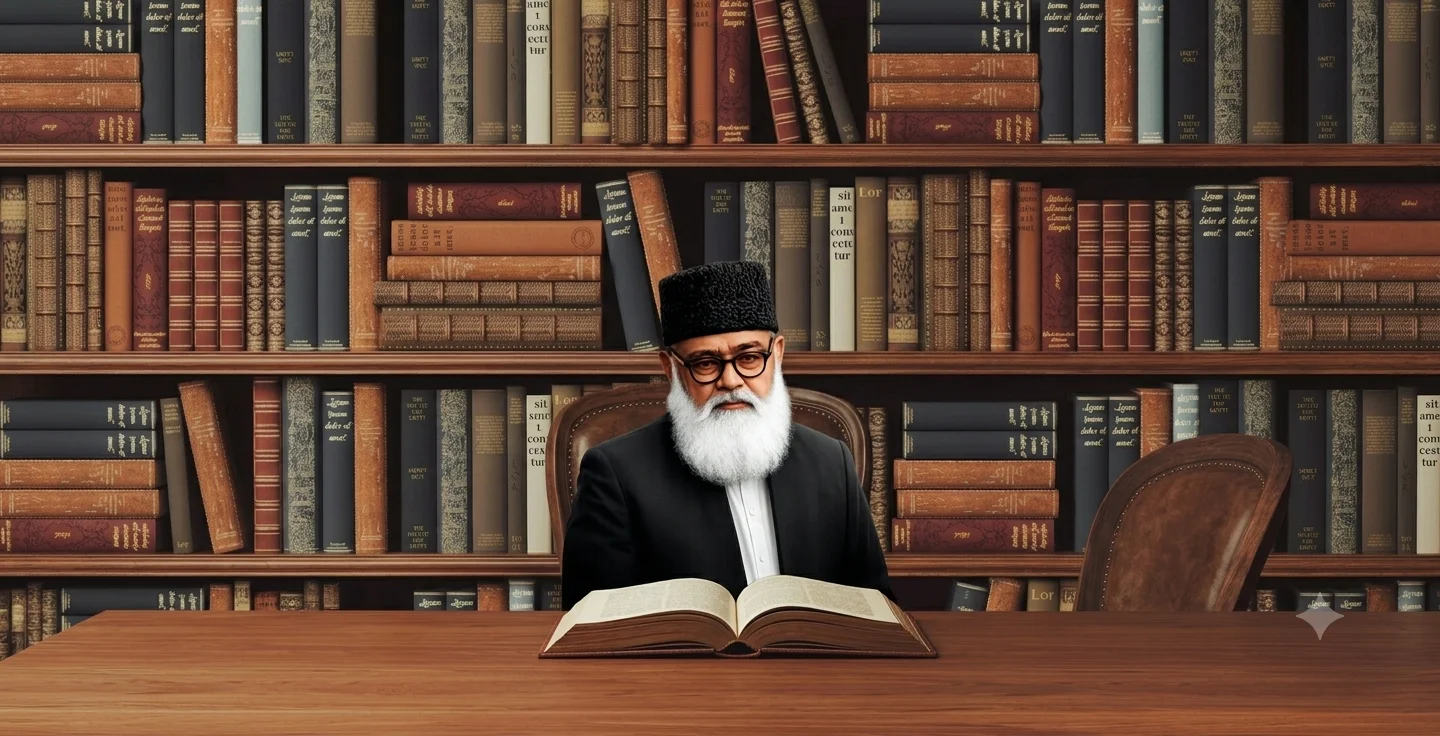
Rise with the Qur’an and Sunnah, and become a force for transformation across the world.
Maulana Maududi
Abul A‘la Maududi was born on Rajab 3, 1321 A.H. (September 25, 1903 C.E.) in Aurangabad, a well-known town of the former princely state of Hyderabad (Deccan), now in India.
The family had a long-standing tradition of spiritual leadership. Several of Maududi’s ancestors were associated with Sufi orders, most notably Khwajah Qutb al-Din Maudud (d. 527 A.H.), a distinguished figure of the Chishti order, from whom the family derives its name.
His forefathers migrated from Chisht to the Indo-Pakistan subcontinent towards the end of the ninth century A.H., bringing with them a rich legacy of spirituality and religious scholarship.
He was born into a respectable family whose paternal lineage is traced back to the Holy Prophet (peace be upon him). This noble ancestry formed an important part of the family's identity and heritage.
His father, Ahmad Hasan (b. 1855 C.E.), was a lawyer by profession and a deeply religious and devout man. He was known for his commitment to faith, discipline, and moral values.
The environment of piety, discipline, and moral responsibility within the household played a defining role in shaping Maududi’s character and outlook. These early influences laid the foundation for his future intellectual and spiritual development.
Maududi received his early education at home under the supervision of his father. He later joined Madrasah Fawqaniyah, an institution that attempted to combine modern Western education with traditional Islamic learning. He completed his secondary education successfully and proceeded toward higher studies at Dar al-‘Ulum, Hyderabad.
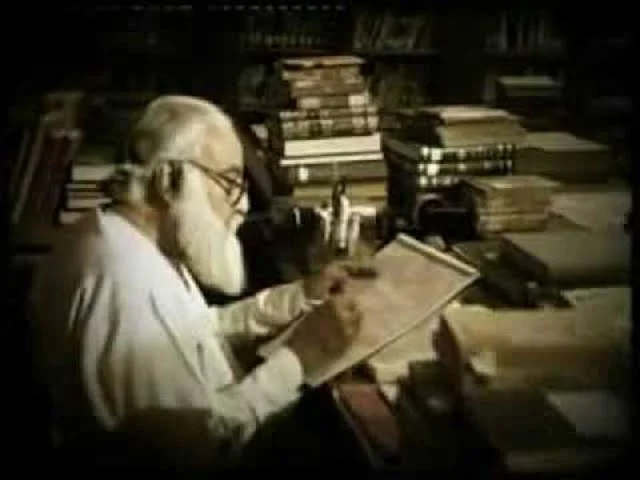
His formal education was interrupted by the illness and death of his father, but his pursuit of knowledge never stopped. Through self-discipline and intellectual curiosity, he continued learning independently. By the early 1920s, he had gained proficiency in Arabic, Persian, and English alongside his mother tongue, Urdu.

While he benefited occasionally from guidance by scholars, the bulk of his intellectual development was self-driven. His moral uprightness and deep commitment to propriety reflected the strong religious upbringing instilled by his parents.
120+
books authored
During this period, he also developed an interest in political movements. He briefly participated in the Khilafat Movement and was associated with the Tahrik-i Hijrat, which encouraged Muslims to migrate to Afghanistan in protest against British rule.
However, his insistence on realistic planning and strategic clarity led to disagreements with movement leadership. Gradually, he distanced himself from such activism and turned his focus toward intellectual and scholarly work.
Following the disruption of his formal education, Maududi turned to journalism to support himself. As early as 1918, he was contributing to a leading Urdu newspaper. By 1920, at the age of seventeen, he was appointed editor of Taj, published from Jabalpore.
Later, he moved to Delhi, where he served as editor of Muslim (1921–1923) and subsequently Al-Jam‘iyat (1925–1928), both associated with the Jami‘at-i ‘Ulama-i Hind. Under his leadership, Al-Jam‘iyat emerged as one of the most influential newspapers among the Muslims of India.
Between 1920 and 1928, Maududi translated several works from Arabic and English while also contributing original writings. During this period, he steadily developed his intellectual and scholarly capabilities through writing, research, and publication.
His first major scholarly work, Al-Jihad fil-Islam, began as a series of articles published in Al-Jam‘iyat in 1927 and was later released as a book in 1930. The work presented a comprehensive exposition of the Islamic law of war and peace.
The book was widely acclaimed and received praise from prominent intellectuals, including Muhammad Iqbal and Mawlana Muhammad Ali Jawhar. Despite being written in his twenties, it established Maududi as a serious scholar and remains one of his most respected contributions.

After resigning from Al-Jam‘iyat in 1928, Maududi moved to Hyderabad and devoted himself to research and writing. In 1933, he launched the monthly journal Tarjuman al-Qur’an, which became the principal platform for presenting and spreading his ideas.
Maududi developed a unique method of analyzing political, social, and economic issues in light of Islamic teachings. His writings combined deep scholarship with clarity and relevance, connecting classical Islamic knowledge to contemporary challenges.
Through Tarjuman al-Qur’an, he explored the relationship between Islam and the modern world. He explained Islamic principles, values, and worldview while critically examining Western philosophical and social ideas through the lens of the Qur’an and Sunnah.
During this period, an invitation from the philosopher-poet Allama Muhammad Iqbal led Maududi to relocate to Pathankot in Punjab. There, he established an academic and research center known as Dar al-Islam. The objective of this institution was to train scholars, produce high-quality research on Islam, and contribute to the reconstruction of Islamic law in light of contemporary realities.
By the mid-1930s, Maududi began addressing the major political and cultural challenges facing Muslims in India. He examined these issues from an Islamic perspective rather than limiting analysis to short-term political or economic considerations.
He critically engaged with emerging ideologies that were influencing Muslim thought, particularly nationalism. Maududi argued that nationalism, in the Indian context, threatened the collective identity of Muslims and was incompatible with the universal and ideological basis of Islam.