Maulana Abul Lais Islahi Nadvi
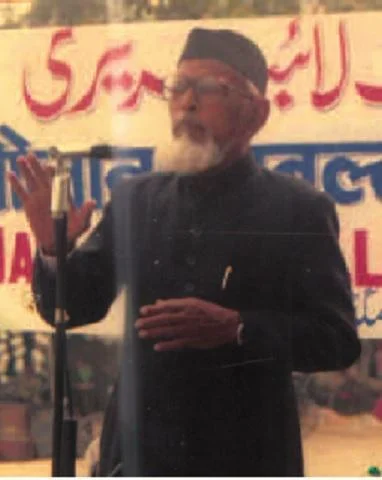
Biography & Religio-Political Contribution: Maulana Abul Lais Islahi Nadvi (Rahimahullah) was the foundational Ameer of Jamaat-e-Islami Hind following the 1947 partition of the subcontinent. Tasked with leading an Islamic movement in a newly secular, Hindu-majority state, he masterfully restructured the Jamaat’s approach to focus on peaceful Dawah, educational reform, and interfaith dialogue, ensuring the movement's survival amidst extreme political volatility.
Impact on the Ummah: He successfully guided Indian Muslims out of the severe psychological trauma of partition. By proving that a disciplined Islamic movement could thrive and protect its ideological purity as a minority, he provided a crucial template for Islamic resilience against state-sponsored secular assimilation.
Connection with Jamaat-e-Islami: A close companion and trusted associate of Maulana Syed Abul A'la Maududi, he shared absolute ideological alignment with the founder. When Maulana Maududi migrated to Pakistan, Maulana Abul Lais bore the immense responsibility of sustaining the Tehreek in India. JI reveres him as a visionary who protected the ideological frontiers of Islam in the subcontinent.
Urdu Publications: A native Urdu intellectual, his prominent works include Masala-e-Deen o Siyasat (The Issue of Religion and Politics) and Tehreek-e-Islami Ki Badiyatein (Fundamentals of the Islamic Movement).